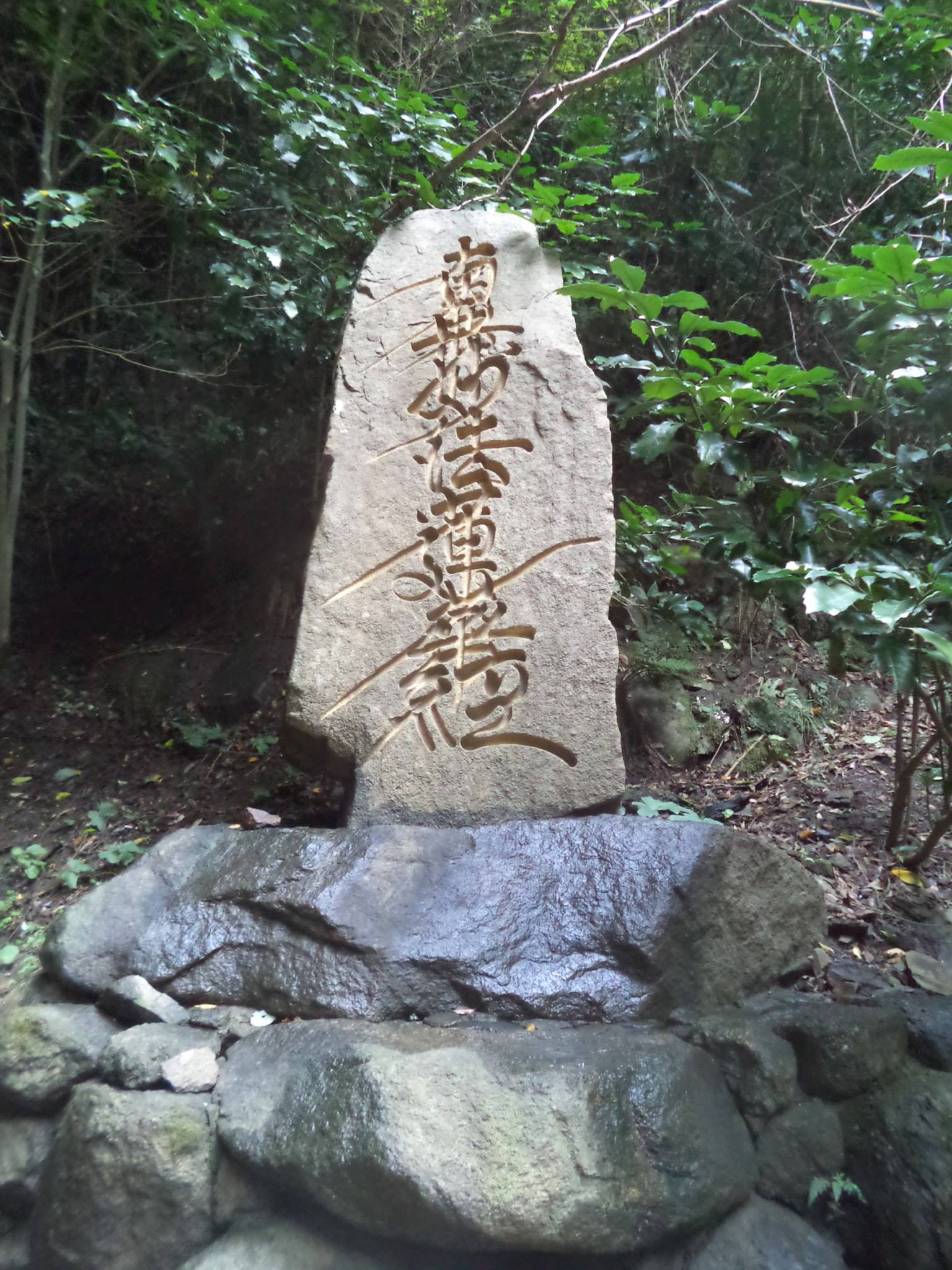
* Gosho: The individual and collected writings of Nichiren (1222–1282).
When Skepticism Becomes a Reflex
Nichiren’s writings reflect a Kamakura-period world in which omens,1 cyclical signs,2 spiritual connection with heavenly beings, gods, or even Shakyamuni himself,3 and the reality of hell,4 were part of the shared symbolic landscape. Modern readers often react by dismissing these elements as superstition—and sometimes that skepticism is healthy. But skepticism can also become a reflex that prevents us from learning how faith functions in Buddhist practice: not as gullibility, but as a disciplined willingness to enter a teaching deeply enough to be changed by it.
The purpose of this article is to point out that modern people would dismiss Nichiren’s “magical view,” and that when we find ourselves doing that, it’s our loss. I’ve done this myself.
I doubt Nichiren would be any more welcome today than he was in his own time. I think we’d treat him like a crank, who entertained delusional ideas and offered a foolish, magical view of the world unworthy of serious consideration.
Things we’d categorize as “folk magic” like hand gestures (mudras),5 mandalas and objects of devotion like the Gohonzon,6 are presented in Nichiren’s writings and in the Lotus Sutra as gifts of spiritual significance. Modern embarrassment about these “odd” gifts is misguided. They increase our faith and we should trust them.
Nichiren’s era’s comfort with “instruments/signs” can be seen as compatible with (or even conducive to) deepening one’s connection with Shakyamuni7 and strengthening the faith needed to break free from the six paths.8
What ‘Healthy Skepticism’ Can’t Teach Us
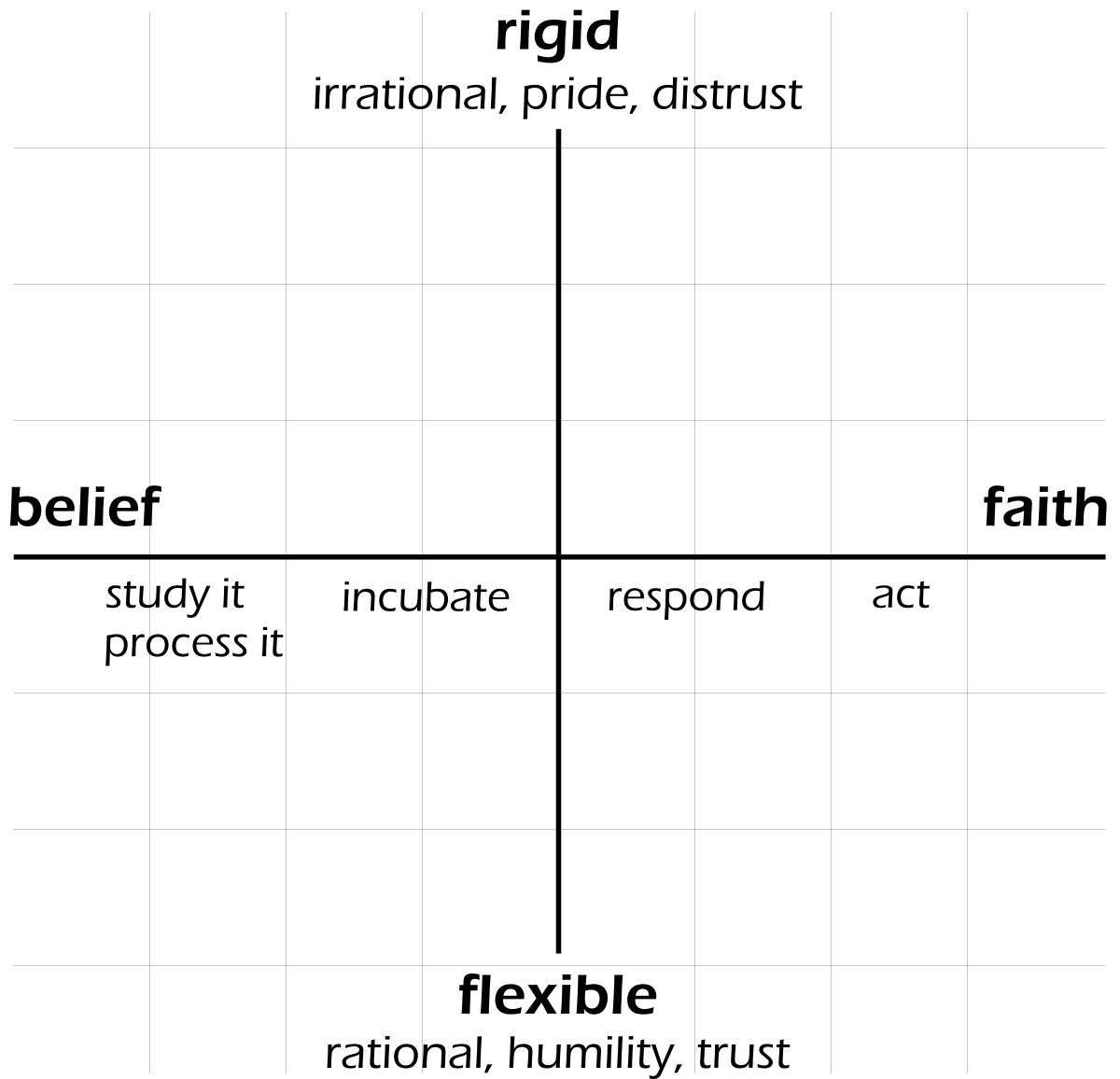
A fair question follows: isn’t there a risk of being too believing? How much do we open to strange ideas before becoming irrationally gullible? That question matters, and I address it more fully in a separate article.9 For now, I’ll simply say this: skepticism is an important tool, and modern people are often well-trained in it. What we are less practiced in is being able to employ learning by faith.
Nichiren was a man of faith and one purpose for this essay is to defend the faith of Nichiren. Faith as a tool for learning new spiritual truth is critical for attaining Buddhahood in this lifetime. The qualifier Nichiren gives that activates the power of Nam-myoho-renge-kyo is “deep faith.”:
“If you chant Myoho-renge-kyo with deep faith in this principle, you are certain to attain Buddhahood in this lifetime.” (Writings of Nichiren Daishonin, Volume 1, page 4. Hereafter abbreviated “WND-1, page number.”)10
The Robe Problem: When the Text Sounds Absurd
In a study through my recent daily reading through the Writings of Nichiren Daishonin, I ran into a compact example of what I’m talking about. Nichiren writes – without hesitation – about being born with a “robe.”

In his letter “Condolences on a Deceased Husband”, Nichiren wrote to the lay nun Myōhō:
“Of the six paths of existence, persons born into the first five, from the realm of hell to that of human beings, are all invariably born naked. Only those who are born into the sixth path, that of heavenly beings, are born wearing a robe. Thus, no matter what kind of sage or worthy person one is destined to be, so long as one is born as a human being, one invariably comes into the world naked. Even Bodhisattva Maitreya, who will succeed Shakyamuni in the future as a Buddha, was born in this way, to say nothing of other types of persons.” (WND-2, 765)
To a modern reader, the idea of being born wearing a robe can sound absurd. Yet Nichiren presents it plainly—as if it were simply part of how things are.
My goal here is not to reject intellectual honesty, or to deny the role of mythic realism and skillful means (upāya). Religious texts can be truth-bearing without being literal reportage. I believe it’s possible to be both intellectually honest and spiritually receptive. Still, the modern worldview trains us to process everything intellectually, and that can leave us weak in the muscles of faith and spiritual receptivity.
When reading texts written from the worldview of thirteenth-century Japan, I’ve found it useful to make a conscious choice to suspend judgment, just to see whether a passage yields insight I’d miss if I dismissed it too quickly (like a metaphorical jewel hidden in a robe, perhaps?).11
Unknowns and the Limits of “Real”
If we want to strengthen our “faith muscles,” here is one mental exercise that may help us resist the reflex to dismiss.
We should remember that in this Saha world, much lies beyond what we can directly see and measure.
Using everything that we have the ability to assemble, using all of our science, using all of our finest instrumentation, using every mechanism that we can devise, we know that approximately 68% of the energy in the universe is what is called dark energy. It’s called dark energy because we know it’s there; we haven’t a clue what it is. Using that same science and ability and instrumentation, we know that 27% of the universe is comprised of dark matter. We know it’s there because physics suggests its presence. We don’t have a clue what it is. The total of these two means that 95% of the universe we can detect is composed of things we cannot see, we cannot understand, we cannot comprehend. We detect and comprehend, at best, only five percent of all that exists using our best science and best instruments to examine the universe.12
On this world—just this world—depending upon the degree of humility that we acknowledge about our present understanding, about ~14% of Earth’s species have been described/indexed (with ~86% undescribed, estimates vary by group).13 Of the known life forms that we know about, humanity makes up no more than .001% of that life.14
I offer these examples not to equate Buddhist cosmology with modern physics, but to point to a shared humility: both acknowledge that most of reality lies beyond direct human perception.
Unknowns don’t prove any particular claim, but they do caution us against equating “unmeasured by my senses” with “impossible.” Imagine someone tells you they can see auras around people. Should I dismiss them as lying or delusional simply because I don’t see what they see? Or is it more honest to hold a middle position—neither credulous nor contemptuous—acknowledging that their experience may be real to them even if I cannot verify it with my own eyes?
Protection After Death, Accountability Now
A year after the letter to the lay nun Myōhō, Nichiren wrote again from Minobu in his “Letter to Jakunichi-bō,” and returned to the theme of a robe:
“But disgrace in this life is nothing. Of far greater concern is the disgrace that appears in the next life. Proceed to the place of practice of the Lotus Sutra, bearing in mind the time when you must face the wardens of hell, and the garment-snatching demoness and the garment-suspending demon will strip off your clothes on the bank of the river of three crossings. The Lotus Sutra is the robe that will keep you from disgrace after this life. The sutra reads, ‘It is like a robe to one who is naked.'” (WND-1, 994)
Now the “robe” becomes more than a cosmological detail; it becomes a vivid moral and spiritual image. The Lotus Sutra itself is described as a robe—protection against disgrace, and a safeguard as one faces the consequences of karma.
It’s worth considering Nichiren’s earlier statement that heavenly beings are “born wearing a robe.” If we take this statement seriously, and we also take seriously the identity of practitioners as bodhisattvas—Bodhisattvas of the Earth—then we are certainly beyond “the sixth path, that of heavenly beings” and we have indeed been born wearing “a robe”.
Nichiren continued describing this “robe”:
“Despite this fact, however, this man Shānavāsa was born wearing a wonderful robe called shāna. This robe of his was not stained by blood or other impurity. It was like a lotus flower that grows up out of a muddy pond, or the wings of a mandarin duck that are not wet by the water.
Moreover, as Shānavāsa grew older and larger, the robe bit by bit expanded in size. In winter it was thick, in summer thin; in spring it was green in color, but turned white in autumn. Since Shānavāsa was a man of wealth, he lacked for nothing, and in time he came to fulfill all the predictions that the Buddha had made concerning him. Thus he entered the Buddhist Order and became a disciple of the Venerable Ānanda. At that time, this robe that he had been wearing changed into monk’s robes of five-, seven-, and nine-strip widths.” (WND-2, 765)
I want to acknowledge the obvious possibility that some things are meant to be considered as symbolic or metaphorical. To simply label anything that seems outlandish as “mere metaphor,” can also become another way of refusing to engage. Nichiren himself does not pause to defend the claim or soften it; he writes as though it is straightforward fact.
Whether understood metaphorically (as karmic protection or spiritual identity) or literally (as an unseen dimension of existence), the image of an invisible robe invites us to reconsider how narrowly we define ‘real.’ Read symbolically or cosmologically, Nichiren’s robe references may remind us that practice itself is a form of protection—and that accountability and responsibility, not comfort, is the true garment of a bodhisattva.
The Shoulder That Bears the Work
The Lotus Sutra describes a ritual gesture that appears repeatedly: the participant bares one shoulder, kneels, and presses their palms together to honor the World-Honored One.
“At that time the bodhisattva Inexhaustible Intent immediately rose from his seat, bared his right shoulder, pressed his palms together and, facing the Buddha, spoke these words…” (The Lotus Sutra and Its Opening and Closing Sutras, p.339. Hereafter abbreviated “LSOC, page number.”)
In Burton Watson’s translation (from the Chinese), the gesture is described as baring the “right shoulder.” In a Sanskrit-based translation, the robe is explicit:
“Thereafter the Bodhisattva Mahâsattva Akshayamati rose from his seat, put his upper robe upon one shoulder, stretched his joined hands towards the Lord, and said…”15
Anciently, clothing was valuable, and most labor was manual. A bare shoulder could become calloused through work, and if scratched or cut, could heal. But a torn robe took effort and time to repair, and any injury to the garment would shorten its life. Therefore, clothing was protected from this daily labor when possible by leaving the weight-bearing shoulder uncovered.
This may suggest that in ritual, leaving the right shoulder bare was a symbol that there was still the need to carry a burden on the right side. The work was not done. In the Lotus Sutra, wherever we find this gesture of baring the right shoulder taking place, it appears to be an indication of those demonstrating the gesture that they are expressing a willingness to commit to whatever action and work may be required to attain the object of their request.16
Jewels Hidden in the Robe
From a modern “sophisticated” standpoint, it can be difficult to take seriously the world Nichiren inhabited—a world where “signs,” unseen beings, and vivid cosmological imagery were common. What important insights do we miss if we dismiss those elements as nonsense too quickly?
In our modern world view of sophistication, I think it is very difficult for us to entertain what was the common magical view of the world from the perspective of those who lived at the time of Nichiren in thirteenth-century Japan. Do we miss some important things that we might otherwise be enlightened by when we simply dismiss as nonsense strange things we read in Nichiren’s writings?
For me, there really are jewels hidden in these robes. And if you want to strengthen your own faith, I invite you to consider what might open up when you allow even Nichiren’s “odd” claims to remain on the table long enough to teach and enlighten you.
Download PDF version of this article here.
- “Why do I say this? Both the Buddhist and non-Buddhist writings make clear that omens will always appear before a certain destined event actually occurs. Thus, when the spider spins its web, it means that some happy event will take place, and when the magpie calls, it means that a visitor will arrive. Even such minor occurrences have their portents. How much more so do major events!” (Writings of Nichiren Daishonin, Volume 1, page 439-40. Hereafter abbreviated “WND-1, page number.”) ↩︎
- “In these twenty-seven years, however, Nichiren was exiled to the province of Izu on the twelfth day of the fifth month in the first year of Kōchō (1261), cyclical sign kanoto-tori, and was wounded on the forehead and had his left hand broken on the eleventh day of the eleventh month in the first year of Bun’ei (1264), cyclical sign kinoe-ne. He was led to the place of execution on the twelfth day of the ninth month in the eighth year of Bun’ei (1271), cyclical sign kanoto-hitsuji, and in the end was exiled to the province of Sado.” (WND-1, 996-97) ↩︎
- “From this time forward, the great bodhisattvas, as well as Brahmā, Shakra, the gods of the sun and moon, and the four heavenly kings, became the disciples of Shakyamuni Buddha, the lord of teachings.” (WND-1, 251) ↩︎
- “If I remain silent, I may escape persecutions in this lifetime, but in my next life I will most certainly fall into the hell of incessant suffering.” (WND-1, 239) ↩︎
- “Their hands form the mudra gestures, their mouths repeat the mantras, but their hearts do not understand the principles of Buddhism.” (WND-1, 169) ↩︎
- In Nichiren Buddhism, the Gohonzon most commonly takes the form of a calligraphic mandala—a scroll inscribed with Chinese and Sanskrit characters. Nichiren inscribed it to embody the essence of the Lotus Sutra and the law of Nam-myoho-renge-kyo (the fundamental chant in this tradition).
“Never seek this Gohonzon outside yourself. The Gohonzon exists only within the mortal flesh of us ordinary people who embrace the Lotus Sutra and chant Nam-myoho-renge-kyo. The body is the palace of the ninth consciousness, the unchanging reality that reigns over all of life’s functions. To be endowed with the Ten Worlds means that all ten, without a single exception, exist in one world. Because of this it is called a mandala. Mandala is a Sanskrit word that is translated as ‘perfectly endowed’ or ‘a cluster of blessings.’ This Gohonzon also is found only in the two characters for faith. This is what the sutra means when it states that one can ‘gain entrance through faith alone.’ …
Make every possible effort for the sake of your next life. What is most important is that, by chanting Nam-myoho-renge-kyo alone, you can attain Buddhahood. It will no doubt depend on the strength of your faith. To have faith is the basis of Buddhism. Thus the fourth volume of Great Concentration and Insight states, ‘Buddhism is like an ocean that one can only enter with faith.'” (WND-1, 832) ↩︎ - In the sense that Nichiren meant when he wrote: “From now on I will accept and uphold this king of the sutras, the Lotus of the one truth, and revere the Buddha, who in the threefold world is alone worthy of honor, as my true teacher.” (WND-1, 134)
and
“Above all, be sure to follow your original teacher so that you are able to attain Buddhahood. Shakyamuni Buddha is the original teacher for all people, and moreover, he is endowed with the virtues of sovereign and parent. Because I have expounded this teaching, I have been exiled and almost killed.” (WND-1, 748) ↩︎ - six paths: The realms of hell, hungry spirits, animals, asuras, human beings, and heavenly beings. “Path” here means the path a life follows in the process of transmigration; it also indicates a realm or state of existence. The six paths were viewed traditionally as realms within which unenlightened beings repeatedly transmigrate. ↩︎
- See my article “Living Polar Bears and Dead Frogs – My Learning Model” ↩︎
- See my article Buddhist Definition of Faith for my study of “What Does It Mean to Have ‘Deep Faith?’” ↩︎
- See parable of jewel in robe, Lotus Sutra chapter 8, (The Lotus Sutra and Its Opening and Closing Sutras, p.190. Hereafter abbreviated “LSOC, page number.”) ↩︎
- What is Dark Matter?, NASA Science ↩︎
- How Many Species Are There on Earth and in the Ocean?, PLOS Biology ↩︎
- This supports Nichiren’s teaching that being born a human in this Saha world is as rare of a thing as specks of dirt on a fingernail. (See WND-2, 132) ↩︎
- The Lotus Sutra Saddharma-Pundarika, The Lotus of the True Law – The Ancient Mahayana Buddhist Text, Complete translated by H. Kern, Pantianos Classics, first published 1884. P.180 ↩︎
- Between the two English translations from Sanskrit and Kumarajiva (Chinese) that I used, reference to “shoulder” occurs in four instances in the first half of the Lotus Sutra (what Nichiren refers to as “theoretical teaching”, and in seven instances in the second half (what Nichiren identifies as “essential teaching”). Nearly twice as many instances are found in the “essential teaching” half of the Lotus Sutra. ↩︎