The Delicate Nature of Our Unsettled Existence

Imagine the earth, balanced precariously in space as it wobbles like a top on its axis, being held in place by whatever incredible combination of miraculous conditions that hold everything together.

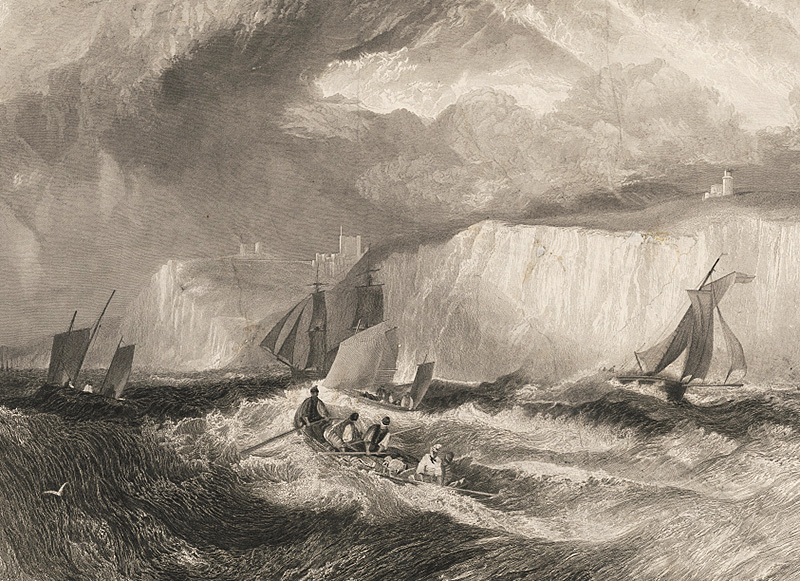
I remember as a teenager on a family vacation in Oregon, joining my dad and uncle in a small boat where we ventured out into the ocean to try our luck at some deep sea fishing. All we caught were a few crabs before the waves started swelling higher and higher. It was quite frightening, plummeting down 30 foot high waves of water in the small fishing boat as we made our way back to shore.

I’m sure that anyone who has experienced even a remote semblance of a storm while in a boat on the ocean can appreciate what an utter helpless feeling it is to be at the mercy of the elements. How incredibly delicate and unstable are our lives in the broader perspective of things.

Imagine the earth, balanced precariously in space as it wobbles like a top on its axis, being held in place by whatever incredible combination of miraculous conditions that hold everything together. And ponder the incredibly tiny sliver of space we call our atmosphere within which we rely for our existence.

“The most striking thing about our atmosphere is that there isn’t very much of it. It extends upwards for about 190 kilometers, which might seem reasonably generous when viewed from ground level, but if you shrank the Earth to the size of standard desktop globe, it would only be about the thickness of a couple of coats of varnish.”

Bill Bryson, A Really Short History of Nearly Everything, pg 97

I’m almost finished with my reading of the Book of Enoch. Yesterday morning’s reading of chapter 101 compared our uncertain and fragile lives with man’s propensity for arrogance against God:

Examine the heaven, you sons of heaven, and all the works of the Most High; and be afraid to do evil in his presence. 2. If he closes the windows of heaven and hinders the rain and the dew from descending upon the earth because of you, what will you do? 3. Or, if he sends his anger against you (and) your deeds, is it not you who would entreat him? Because you utter bold and hard (words) against his righteousness, you shall have no peace. 4. Do you not see the sailors of the ships, how their ships are tossed up and down by the billows and are shaken by the winds, and they become anxious? 5. On this account (it is evident that) they are seized by fear, for they will discharge all their valuable property – the goods that are with them – into the sea, they think in their hearts that the sea will swallow them up and they will perish in it. 6. Is not the entire sea and all her waters and all her movements the very work of the Most High? Has he not ordered her courses of action and her waters – (indeed) her totality – with sand? 7. At his rebuke they become frightened, and she dries up then her fish die and all that is in her. But you, sinners, who are upon the earth, fear him not! 8. Did he not make the heaven and the earth and all that is in them? Who gave the knowledge of wisdom to all those who move upon the earth and in the sea? 9. Do not the sailors of the ships fear the sea? Yet the sinners do not fear the Most High.

1 En 101, Old Testamant Pseudepigrapha, James H. Charlesworth

Consider King Benjamin’s description that we are supported and preserved by God’s power moment to moment, how He lends us breath and sustains us that we may live and move and do according to our own will (Mosiah 2:21. See also Acts 17:28). Not only does God put up with our brass overconfidence in ourselves, he sustains us in the very act of our disdain for His role in supporting us day by day.

In 2 Enoch, God put it this way:

“There is no counselor and no successor, only myself, eternal, not made by hands. My unchanging thought is (my) counselor, and my word is (my) deed. And my eyes behold all things. If I turn my face away, then all falls into destruction; but if I look at it, then all is stable.”

2 Enoch (A) 33:4, Old Testament Pseudepigrapha, 1:157, emphasis mine.

All it involves for God’s spirit to “no longer strive with man” (Gen 6:3) is for Him to withdraw His gaze.

In the last few weeks a great alarm has been raised about a viral pandemic. It illustrates something about all nations and institutions: Although they may seem durable, they are all vulnerable and easily destroyed by very simple means. Like locusts destroying crops of Egypt in the story of Exodus (Ex 10:12-20), great societies are shaken through the smallest of means.

The good news is that although all this has given us a glimpse of how unstable our lives and society can be, it is also evident that God has not yet withdrawn His gaze. There is still much work yet to be done in the Lord’s vineyard (see Jacob 5:47-51). Will we be among those branches who respond favorably to the unsettling pruning, digging, cutting, moving and grafting that is currently underway?


Standing Against Authorities of the Church?

When the standard curriculum of church meetings and conferences does not go deeper than basic milk, and my craving for deeper life sustaining meat is filled by a personal study, how do I avoid the natural tendency to become prideful because I think I now know more than others?

Preparing for last week’s Sunday School lesson (yes, I’ve actually been preparing and giving a lesson during this time of quarantine), I ran across this quote by President Kimball, explaining how dangerous pride can be.

“To satisfy his own egotism, to feed his pride, to justify vain ambition, a man took a stand against the authorities of the Church. He followed the usual pattern – no apostasy at first, only superiority of knowledge with mild criticism of the brethren. He loved the brethren, he said, but they had failed to see things he saw. He was sure his interpretation was correct. He would still love the Church, he maintained, but his criticism grew and developed into ever-widening areas. He could not yield in good conscience; he had his pride. He spoke of it among his associates; he talked of it at home. His children did not accept his philosophy wholly, but their confidence was shaken in the brethren and the Church. They were frustrated and became inactive. They married out of the Church and he lost them. He later realized the folly of his position and returned to humbleness and activity, but he had lost his children.”

(Kimball, Spencer W. Faith Precedes the Miracle. Salt Lake City: Deseret Book, 1972, p. 306.)

This caught my attention because I have questioned authorities of the church myself on this blog. These remarks by President Kimball raised a couple of questions of my own. He stated that this man’s children’s “confidence was shaken in the brethren and the Church”. The first question to cross my mind was, why is the focus on the “brethren and the Church”? Why not Christ? And where it appears I am guilty of what could be seen as questioning authority myself, my second question is, what is the difference between “taking a stand against the authorities of the Church”, and raising concerns, asking questions, or pointing out what appears to be inconsistencies between teachings in conference and scripture? What if, instead of being seen as antagonistic to authorities, my questions are sincere concerns, rooted in a desire to truly understand what it means to come unto Christ?

In a recent Address to CES Religious Educators, Elder M. Russell Ballard counseled teachers to prepare and teach in ways that will “build unwavering faith in the lives of our precious youth… Gone are the days,” he said, “when a student raised a sincere concern and a teacher bore his or her testimony as a response intended to avoid the issue. Gone are the days when students were protected from people who attacked the Church.” (An Evening with Elder M. Russell Ballard, Salt Lake Tabernacle, February 26, 2016)

Perusing back through my previous blog posts, I took note of some sincere questions that have risen from things general authorities have taught.

The question isn’t do I think I know something Elder Basset or Elder Corbridge does not. The question is, did Joseph Smith know something they do not? When what the authority of the church teaches differs from what Joseph taught or what scripture teaches, or what Christ taught, how do I reconcile that? President Joseph Fielding Smith put it this way:

“It makes no difference what is written or what anyone has said, if what has been said is in conflict with what the Lord has revealed, we can set it aside. My words, and the teachings of any other member of the Church, high or low, if they do not square with the revelations, we need not accept them. Let us have this matter clear. We have accepted the four standard works as the measuring yardsticks, or balances, by which we measure every man’s doctrine… If Joseph Fielding Smith writes something which is out of harmony with the revelations, then every member of the Church is duty bound to reject it.”

(Doctrines of Salvation, 3 vols., edited by Bruce R. McConkie [Salt Lake City: Bookcraft, 1954-1956], 3: 203.)

Lest I be misunderstood, I agree with President Kimball in the opening quote. He is cautioning us against pride. The antidote to which, as President Benson reminded us, is humility.

When the standard curriculum of church meetings and conferences does not go deeper than basic milk, and my craving for deeper life sustaining meat is filled by a personal study, how do I avoid the natural tendency to become prideful because I think I now know more than others? Joseph Smith eluded to this very dilemma in his letter to the church from Liberty Jail (words that belong somewhere between verse 25 and 26 of our Doctrine and Covenants section 121):

“How vain and trifling have been our spirits, our conferences, our councils, our meetings, our private as well as public conversations — too low, too mean, too vulgar, too condescending for the dignified characters of the called and chosen of God, according to the purposes of His will, from before the foundation of the world! We are called to hold the keys of the mysteries of those things that have been kept hid from the foundation of the world until now. Some have tasted a little of these things, many of which are to be poured down from heaven upon the heads of babes; yea, upon the weak, obscure and despised ones of the earth. Therefore we beseech of you, brethren, that you bear with those who do not feel themselves more worthy than yourselves, while we exhort one another to a reformation with one and all both old and young, teachers and taught, both high and low, rich and poor, bond and free, male and female; let honesty and sobriety, and candor, and solemnity, and virtue, and pureness, and meekness, and simplicity crown our heads in every place and in fine, become as little children, without malice, guile or hypocrisy.”

(TPJS, p 137, emphasis mine)

In the end, when it comes to receiving light and truth from God, I don’t believe education is of any real advantage. Humility is the only real, great advantage that any soul ever possesses. On this point, I have to admit, I don’t feel in possession of any great advantage.

Author Unknown?

Must I limit my study only to what is considered canonical to find God in it?

This morning I read from the the book of John the story of Christ healing a man who was born blind. The man’s conversation with the Pharisees about his anonymous healer is enlightening. If you are not familiar with the story, the man who had been born blind was healed by the Savior on the
Sabbath. This was an act that was considered by the ruling class of the Jews as not only unlawful, but for which they had already had a confrontation with Jesus earlier (John 5) and were seeking to kill him for it. This healing on the Sabbath only added fuel to the fire. The problem was that the healed man could not identify his benefactor. After questioning the man and even the man’s parents, and after asking him again how his eyes had been opened, the man must have been exasperated, for he retorted that he had already answered them, then asked:

“’Why do you want to hear it again? Do you want to become his disciples, too?’
Then they hurled insults at him and said, ‘You are this fellow’s disciple! We are disciples of Moses! We know that God spoke to Moses, but as for this fellow, we don’t even know where he comes from.’
The man answered, ‘Now that is remarkable! You don’t know where he comes from, yet he opened my eyes…”

(John 9:27-30)

I paused at the reaction of the Pharisees. It made me wonder at how we often cling to our own traditional views and how unwilling we are to consider things outside our own boxes.

How does the example of the Pharisees’ response compare with words of God found in places that we may not recognize as scripture simply because we do not know the author? Can God’s word be found in books we classify as “pseudepigraphal” and reject because we do not know where it comes from?

Pseudepigrapha are falsely-attributed works, texts whose claimed author is not the true author, or a work whose real author attributed it to a figure of the past. Many works classified as pseudipigraphal were considered by some early Christians as scripture, but were eventually rejected from the canon during christological debates in the early church. I have often wondered about what gems of enlightened wisdom are to be found in some of these writings. For example, words of past prophetic writing is rejected in pseudipigraphal works because the real author attributes the words to some important figure in the past. Yet we don’t see Moses criticized for authoring words of Jacob’s blessing to his sons in Genesis chapter 49.

Must I limit my study only to what is considered canonical to find God in it? Can my eyes be opened from sources where the mortal author is unknown? If I adopt an attitude of accepting truth from wherever it may be found, why limit myself to only one canon of scripture?

“[O]ne should accept the truth from whatever source it proceeds.”
Moses Maimonides, Jewish rabbi, physician, and philosopher, The Eight Chapters Of Maimonides On Ethics, translated by Joseph I. Gorfinkle, pg 35-36

“… Mormonism is truth, in other words the doctrine of the Latter-day Saints, is truth. … The first and fundamental principle of our holy religion is, that we believe that we have a right to embrace all, and every item of truth, without limitation or without being circumscribed or prohibited by the creeds or superstitious notions of men, or by the dominations of one another, when that truth is clearly demonstrated to our minds, and we have the highest degree of evidence of the same.”
Letter from Joseph Smith to Isaac Galland, Mar. 22, 1839, Liberty Jail, Liberty, Missouri, published in Times and Seasons, Feb. 1840, pp. 53–54; spelling and grammar modernized.

“If you shut your door to all errors truth will be shut out.”
Rabindranath Tagore, Stray Birds (1916), pg 130

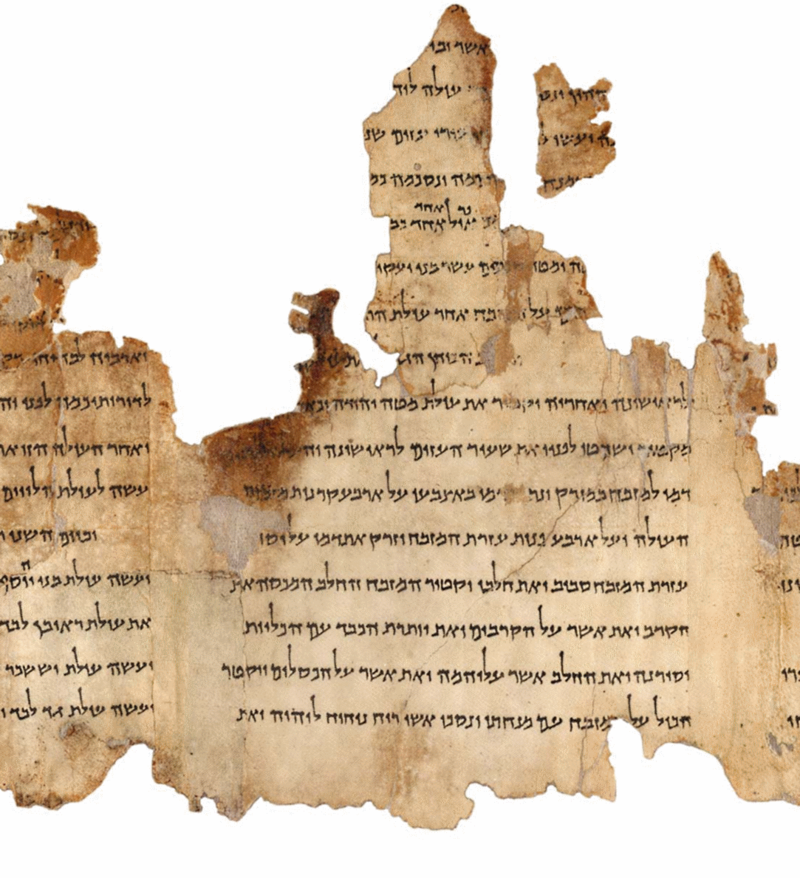
In November of last year, a question arose as I was reading through the Dead Sea Scrolls. The unknown author(s) of many of these ancient documents from Qumran seems to take some amazing liberties with regard to authoritatively giving his own interpretation (often titled “pesher”) or spin on the scripture of his day. In other places the author simply declares the word of the Lord. Take this remarkable passage from cave 4, translated from fragment 4Q371-3:

“I shall praise the Lo[rd that] my meditation [might] be pleasing to Him […] [and] heart, to teach understanding […] judgment, for my word is [swee]ter than honey, [my] ton[gue] more pleasing than wine. [Every word that I speak] is truth, every utterance of my mouth, righ[teousness]. None of these testimonies shall fail, none of these fine promises perish, for all of them […] The Lord has opened my mouth, the words that I speak come from Him. His word is in me, so as to declare [… To us belong] His mercies; He shall not grant His laws to another nation; neither shall He adorn any stranger with them. Surely […] [A]braham, for He made a covenant with Jacob to be with him for all etern[ity…”
Portion 4, lines 4-9, as quoted from Dead Sea Scrolls, A New Translation, by Michael Wise, Martin Abegg Jr., & Edward Cook p. 334

Compare the audacious words of this author with this passage we read from Isaiah in the Bible:

I clothe the heavens with darkness
and make sackcloth its covering.
The Sovereign Lord has given me a well-instructed tongue,
to know the word that sustains the weary.
He wakens me morning by morning,
wakens my ear to listen like one being instructed.
The Sovereign Lord has opened my ears;
I have not been rebellious,
I have not turned away.

Because the Sovereign Lord helps me,
I will not be disgraced.
Therefore have I set my face like flint,
and I know I will not be put to shame.
He who vindicates me is near.
Who then will bring charges against me?
Let us face each other!
Who is my accuser?
Let him confront me!
It is the Sovereign Lord who helps me.
Who will condemn me?
They will all wear out like a garment;
the moths will eat them up.

Isa 50:3-9, NIV

Here Isaiah begins with words that are a direct quote from God. If you were completely unfamiliar with Isaiah and were reading this for the first time, these statement could seem quite bold (or course, it is bold even when you are familiar with Isaiah). These words not only apply to Isaiah himself, but are prophetic words that apply to Christ.

How are the words from the unknown author in the Dead Sea Scrolls different from the bold testimony we see written by Isaiah? Was this person from Qumran inspired like Isaiah (or Jeremiah, or David, or Paul)? Why couldn’t I accept these words as scripture? For me, I am inspired by these words. I feel like exclaiming, “Now that is remarkable! We don’t know where he comes from, yet he opens my eyes.”

Dead Sea Scroll Index, Comparison of English Translations

As I do with the Bible, I expand my understanding by comparing translations of the Dead Sea Scrolls. I hope this index proves useful to those seeking a deeper experience by being able to navigate between translations.

Not knowing how to read ancient Hebrew or Aramaic, I’m left to rely on someone else’s interpretation of the Dead Sea Scrolls in English. Like I do with the Bible, I have discovered I can expand my understanding by comparing translations.

When I decided to read the Dead Sea Scrolls, there were three main translations that competed for my attention:

The Dead Sea Scrolls Translated, Second Edition, by Florentino Garcia Martinez
Dead Sea Scrolls, A New Translation, by Michael Wise, Martin Abegg Jr., & Edward Cook
The Complete Dead Sea Scrolls in English by Geza Vermes

Not knowing anything about the Dead Sea Scrolls and basing my decision off reviews and the description of the book, I purchased Dead Sea Scrolls, A New Translation, by Michael Wise, Martin Abegg Jr., & Edward Cook (hereafter abbreviated as DSSNT). Later, in order to compare translations, I added to my library The Dead Sea Scrolls Translated, Second Edition, by Florentino Garcia Martinez (hereafter abbreviated as TDSST).

The fragmentary nature of the scrolls makes it an arduous task to read through any translation of these scrolls. One must be rather serious and committed in order to find the nuggets of wisdom to be found there.

Without some form of bearing on the landscape and background of the different scrolls I would have been somewhat lost without the commentary provided in the Dead Sea Scrolls, A New Translation (DSSNT) by Wise, Abegg and Cook. Unless you are familiar with some of this background information you would almost need a companion text like James VanderKam’s The Dead Sea Scrolls Today, to fully appreciate The Dead Sea Scrolls Translated (TDSST) by Martinez, where he presents the full translation without commentary on the individual manuscripts.

When I began to try to compare the two translations (DSSNT and TDSST) I quickly discovered how challenging it was to find a given manuscript in the other translation. Between the two, the manuscripts of the scrolls are organized in completely different ways. The Index of Manuscripts in the Epilogue of DSSNT became an invaluable resource. At the end of TDSST there is a List of the Manuscripts from Qumran, but it was not immediately apparent to me that I could find the page number for a given manuscript within TDSST using this list, as it is a comprehensive list of all the scroll manuscripts, including those not included in the book. Only listings included in the book have a page number reference. I spent several weeks composing an index of my own to help me navigate between them, which can be found below.

Having solved the problem of being able to find the manuscripts between the two translations, I could now more easily compare them, which has given me a richer experience in understanding the beauty of these wonderful ancient scrolls from Qumran.

I give here only a few examples:

1QH Col 18:33-34
DSSNT p. 106
“My heart behaves as if mad in anguish and my loins tremble. My groaning enters the depths and completely searches out the chambers of Sheol.”
TDSST p. 352
“My heart flutters in anxiety, my kidneys in alarm, my sigh reaches down to the abyss, even pierces the caverns of Sheol.”

1QH Col 16:11-12
DSSNT p. 102
But You, O [G]od, You protect its fruit with the mystery of powerful warriors, holy spirits, and the whirling flame of fire so that none may [come to the] fountain of life
TDSST p. 345
But you, O God, you protect your fruit with they mystery of powerful heroes, of spirits of holiness, so that the flame of the searing fire [will] not [reach] the spring of life

1QH Col 17: 15-17
DSSNT p. 104
one person may be wiser [than his fell]ow, humanity is more honored than a vessel of c[lay], and one spirit may surpass another spirit; but as for Your mighty str[ength], no power can compare. To your glory there are no [bounds, and] to Your wisdom there is no measure,
TDSST p. 348
a fellow is wiser [than a fellow,] the flesh is respected more than one made from [clay,] one spirit is more powerful than another spirit; but before your might, nothing is strong, and nothing is [comparable] to your glory, and to your wisdom there is no measure,

4Q417 Frag 2 col 1:6-12
DSSNT p. 380
[… at night meditate on the secret] of why things are and investigate it at all times, and then you will know truth and evil, wisdom [and falsehood … Consider the wicked] in all their ways, with all their punishments throughout the world-eras and the eternal punishment
TDSST p. 387
[… day and night meditate on the mystery of exis]tence and always investigate. Then you shall know truth and injustice, wisdom […] … […] in all his paths with his visitations through all the eternal periods, and the eternal visitation.

4Q418 Frag 81:15-20
DSSNT p. 387
You are one who understands, if He has made you rule over the skill of His hands, and know […] goodness for all humans who pass by, and from there you will attend to your food […] consider well and add to your learning by listening to all your instructors […] show your poverty to all who seek pleasure and then you will establish […] you will be filled and satisfied by abundant goodness and by the skill of your hands […] for God has distributed an inheritance to every [living thing] and all those who are wise at heart will have success […]
TDSST p. 391
And you, understand; if through the wisdom of hands he has given you dominion, […] extension (?) for every man who walks. And from there he will administer your nourishment […] Understand the praised one, and by the whole hand of your sages add […] Show your lack to all those who seek delicacies. Then you will understand […] Fill and be replete with the abundance of goodness and the wisdom of your hands […] for God has divided the inheritance [of every living creature] and all those wise at heart understand […]

Overall, if I had to only select one translation I would recommend Dead Sea Scrolls, A New Translation, by Wise, Abegg, & Cook. Not only do they provide insightful commentary to help you navigate the landscape of the scrolls and great resources in their Epilogue, their translation seemed to capture what felt to me like a better essence of meaning. Having said that, I have to say there were many cases where I felt in The Dead Sea Scrolls Translated by Martinez, he captured passages in a way that resonated as something truer to my understanding of things. I cannot speak to what is a better translation as I have no experience with the original ancient languages. I can only compare with my own perceptions as I understand things and try to remain open to truth wherever it comes from.

Whatever translation you choose, I advise the reader to take the effort to read at least some edifying Dead Sea Scroll manuscripts like the Thanksgiving Scroll (1QH, 4Q427, and 4Q429), Wisdom scroll on the Secret of the Way Things Are or Mystery of Existence (4Q416-418), Blessings of the Wise (4Q525), and Apocryphal Psalms of David (11Q5-6; 4Q88, 4Q448). There are many delightful nuggets of wisdom that are sure to enlighten and uplift in the Dead Sea Scrolls. Your time will not be wasted in searching them out.

God bless,
Jay Ball

Dead Sea Scroll Index, Comparison of English Translations

The following index connects Dead Sea Scroll manuscript numbers with where they can be found in the english translations:
The Dead Sea Scrolls Translated, Second Edition, by Florentino Garcia Martinez (abbreviated as TDSST)
and
Dead Sea Scrolls, A New Translation, by Michael Wise, Martin Abegg Jr., & Edward Cook (abbreviated as DSSNT)

There are many duplications in the Dead Sea Scroll manuscripts as copies of the same information were found on various scrolls. For this reason Wise, Abegg and Cook in their translation Dead Sea Scrolls, A New Translation (DSSNT) have attempted to make it easier on the reader by taking the manuscripts where there is duplication, and combined them together and organized these into sections called “texts”. In the Epilogue of their book they have provided a very helpful Index of Manuscripts where they reference Dead Sea Scroll manuscript numbers to the text numbers they have assigned in their book. I have used their index as a base from which I have structured my index below.

The scroll manuscript numbers reference to the page (and text) numbers where the given manuscript can be found in the referenced translations. Because they have combined several manuscripts into one text within DSSNT, it is not always evident specifically where the given Dead Sea Scroll manuscript may be referenced. In these cases I have used parenthesis () to reference the page number where the text translation begins.

Italicized text represents references to sub sections of texts within a given scroll manuscript to further refine links to passages that would otherwise be difficult to find within the overall scroll manuscript between the translations.

I hope this index proves useful to those seeking a deeper experience by being able to navigate between and compare the translations.

View and Download Dead Sea Scroll Index, Comparison of English Translations as PDF document here.

Do I Belong to a Cult?

Below is the ICSA list of Characteristics Associated with Cultic Groups along side comparative notes about the Mormon Church at the time of Joseph Smith.

In their book, How Wide the Divide, A Mormon & an Evangelical in Conversation, Steven Robinson and Craig Blomberg make the following statement,

“Many of these characteristics [of what define a ‘cult’] no longer apply to Mormonism” (p. 193)

“No longer apply”, suggests that they once did apply. Exactly what “cult-like” characteristics did at one time apply in the past that “no longer apply” now? This is the question I intend to address in this article.

The reasoning for the statement is based on a broad definition of “cult” given by Walter Martin.

“In his book The New Cults, Walter Martin defines a cult as ‘a group, religious in nature, which surrounds a leader, or a group which either denies or misinterprets essential biblical doctrines.’” (LetUsReason.org, Eight Marks of Organized Heresy Which Make a CULT)

“Unless the term ‘cult’ is to be so broad as to be meaningless (that is, equivalent to anything that is not Evangelical—including most Catholicism, Eastern Orthodoxy and liberal Protes­tantism, not to mention entirely separate world religions like Hinduism, Buddhism or Islam), then it should be reserved for the kind of small, bizarre fringe groups sociologists more technically label as cultic (such as those led to their deaths by Jim Jones or David Koresh).” (How Wide the Divide, p. 193)

I am less interested in a definition of cult as anything that disagrees with someone’s definition of Christian teachings from the Bible, and am more concerned with the very real danger of finding myself aligned with something legitimately insidious. After all, the victims caught in the Jim Jones or David Koresh traps were, like me, innocent sincere seekers of truth. How does one remain open to truth (as scripture tells us, “like a child”), without becoming vulnerable and susceptible to the evils of someone or some institution with an agenda?

To address this I would rather trust a less biased source for information on how real cults work.

International Cultic Studies Association

“Founded in 1979, the International Cultic Studies Association (ICSA) is a global network of people concerned about psychological manipulation and abuse in cultic or high-demand groups, alternative movements, and other environments. ICSA is tax-exempt, supports civil liberties, and is not affiliated with any religious or commercial organizations.”

ICSA has developed a list of characteristics associated with cultic groups that can be used as a tool to evaluate an organization against a standard of what can be considered a cult.

“Concerted efforts at influence and control lie at the core of cultic groups, programs, and relationships. Many members, former members, and supporters of cults are not fully aware of the extent to which members may have been manipulated, exploited, even abused. The following list of social-structural, social-psychological, and interpersonal behavioral patterns commonly found in cultic environments may be helpful in assessing a particular group or relationship.

Compare these patterns to the situation you were in (or in which you, a family member, or friend is currently involved). This list may help you determine whether there is cause for concern. Bear in mind that this list is not meant to be a “cult scale” or a definitive checklist to determine whether a specific group is a cult. This is not so much a diagnostic instrument as it is an analytical tool.” (Michael D. Langone, ICSA Today, Vol. 6, No. 3, 2015, 10.)

Characteristics Associated with Cultic Groups Compared with Early Mormon Church

Below is the ICSA list of Characteristics Associated with Cultic Groups along side comparative notes about the Mormon* Church at the time of Joseph Smith. Nothing exhaustive is attempted here. This is a list of observations that come to mind to demonstrate cult/non-cult like behavior of the church at the time of Joseph Smith.

No attempt has been made here to compare cult-like characteristics and patterns to modern-day Mormon or LDS churches.

[OK, here is where I admit I’m too lazy to figure out how to do a table along with all the endnotes in WordPress, so to read the rest of this article you will need to view it in one of the two formats I link to below. Enjoy:]

Characteristics Associated with Cultic Groups in GoogleDocs format (with clickable links).

Or download as PDF document – Characteristics Associated with Cultic Groups.


*  There are over 80 denominations claiming Joseph Smith as its founder. I use the term “Mormon” (instead of “LDS” or something else) to identify a common term by which most will recognize the original sect founded by Joseph Smith.